
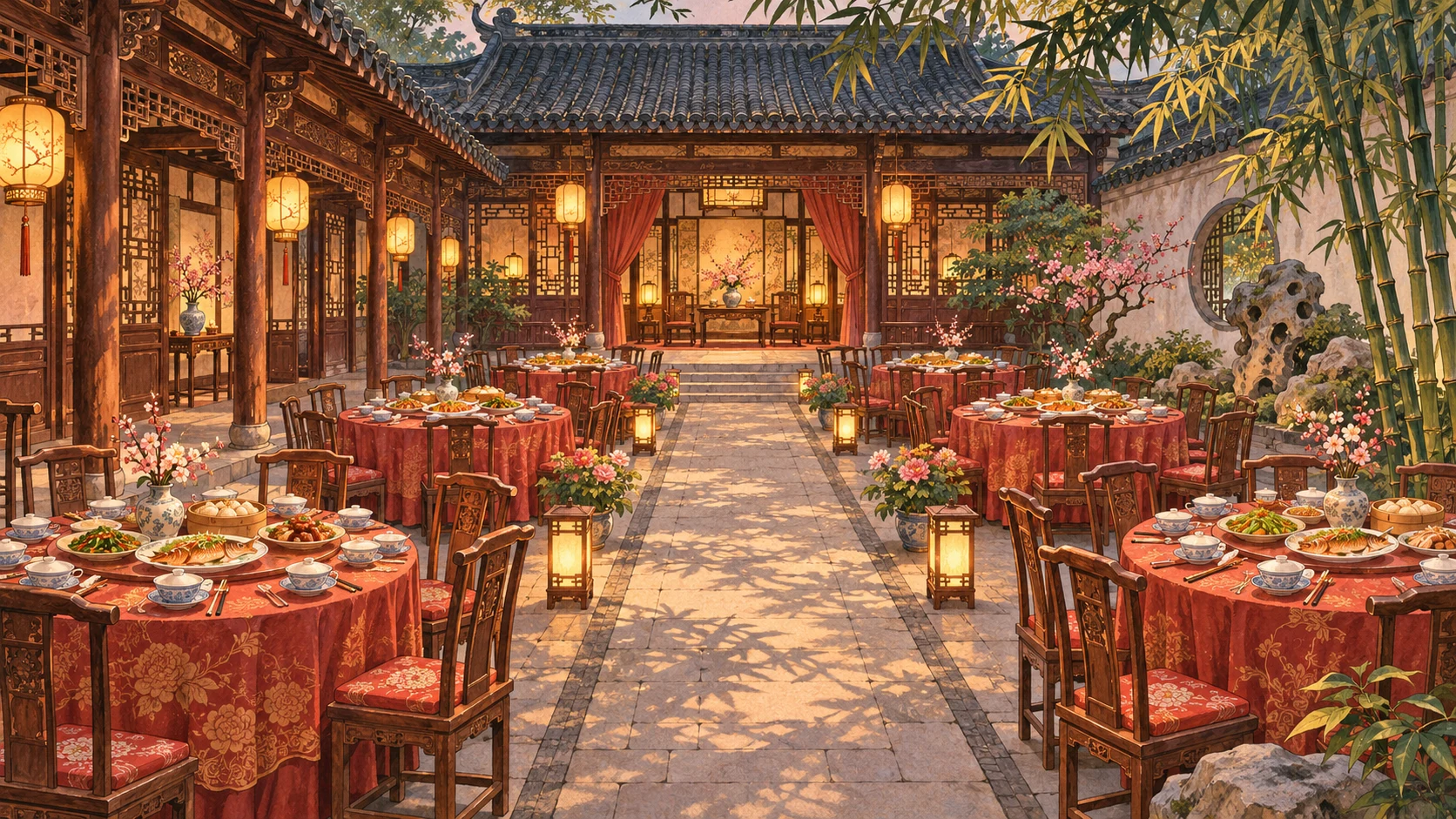
Use the setting as a hosting framework
ManorFeast is for a banquet inspired by an imagined household or estate, not a reconstruction of a verified historical ceremony. It brings guest identity labels, a five-part event outline, menu notes, placeholder seating and budget allocations into one host document. It is useful when atmosphere is clear but the practical order is still vague.
Decide what the formal elements are meant to achieve. A brief household welcome can introduce people; it need not establish a hierarchy between real families. Make costumes, ceremonial introductions and storytelling optional. Guests should understand where to sit and when food is served without needing background knowledge of the fictional world.
Enter the banquet details
Set Theme / setting, Guests, Budget, Duration in minutes, Start time and Venue. The shared form also contains venue-setting and atmosphere choices; those are not an automatic historical-style selector for this tool. Add household and guest identities on separate lines, then specify Banquet style, menu courses and seats per table.
Identity lines become ordered station records and short welcome cues. They are not a named guest list and do not automatically seat each household together. Menu lines become numbered courses with a portion count equal to total guests. Confirm dietary alternatives, serving sizes and supplier instructions separately: the output cannot determine whether one portion is an appropriate quantity.
Separate the outline from the detailed running order
The five phases cover courtyard welcome, household introductions, seating, banquet and tea/farewells. Entered minutes are divided into five nearly equal blocks, with any remainder added to the last. This is a rough allocation, not a claim that eating and introductions require the same real duration.
Budget is split into venue 25%, food 40%, materials 20% and reserve 15%. Seating creates enough tables for the entered capacity and labels people Guest 1 onward. Props and preparation notes help prompt the host’s work. None of these outputs measures a room, purchases decor, maps named guests to chairs or checks a menu against individual dietary needs.
Fictional example: fourteen people in the lantern hall
Enter fourteen guests, 800 budget units, 100 minutes from 18:00, an indoor venue named Lantern hall, and a theme of Evening household supper. Use three identity lines: Welcome household, Visiting readers and Garden friends. Choose Shared supper, three menu lines and five seats per table.
The outline runs in twenty-minute phases from 18:00 to 19:40. It creates three tables containing five, five and four placeholder guests. Every menu course is labelled for fourteen portions. The initial budget is 200 venue, 320 food, 160 materials and 120 reserve. Three identity lines produce three welcome cues; they do not require three equally sized family groups.
The host then checks the actual food-service window and writes a shorter introduction using TimeWeave. GuestWeave supplies the confirmed roster, while SeatCanvas can handle named assignments. Those are separate planning steps, not automatic synchronization between tools. Printed household labels can add atmosphere after the essential service information is clear.
Prepare the room people will actually use
Check circulation routes with tables and chairs in place. Keep accessible places near a suitable route because they work for the guest, not because a fictional ranking says they should be honored. Use stable, venue-permitted decorations and keep serving labels readable in the lighting you intend to use.
Ask a helper to rehearse the welcome cue and the handover to food service. If the first course arrives early, decide which optional introduction can move to the table. Keep real dietary and access arrangements with the appropriate host rather than on theatrical place cards. Save the reviewed plan and export a backup before replacing a draft.
Questions before you begin
Does this follow an authentic historical seating system?
No. The manor is a creative setting. The output uses generic planning rules and optional ceremony, not verified historical precedence.
Will entering household names place them at matching tables?
No. Identity lines create welcome material. Seating uses Guest 1 and other placeholders; assign real names separately.
Can the generated menu identify allergies?
No. It repeats your menu text and guest count. Confirm ingredients, alternatives and service practices with the relevant people.
Why is the welcome as long as the meal?
The initial schedule divides time into five blocks. Refine it into realistic durations in a separate detailed running order before using it on the day.